
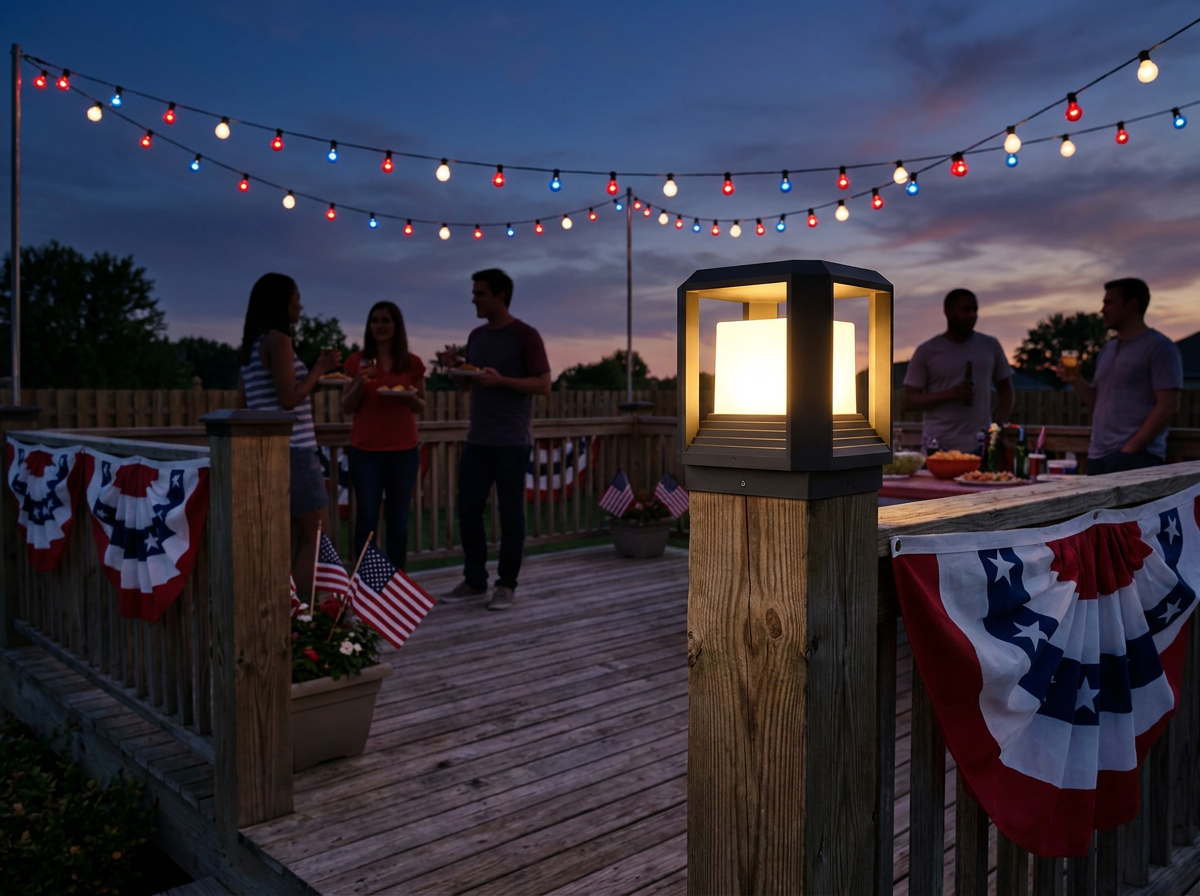
With the July 4th 2026 cookout weekend just days away, American homeowners are facing the same last-minute outdoor lighting decision they always face: should the driveway, fence post, or deck column get a hardwired LED pillar post light, or is a solar-powered post light good enough for a few weekends of backyard entertaining? Both options dominate Amazon and big-box store shelves in summer 2026, but they perform very differently once the BBQ crowd shows up at dusk. This side-by-side comparison breaks down brightness, reliability, install effort, total cost, and curb-appeal impact — using the 9.88″ 20W 3000K hardwired PLUSLED outdoor post light as the modern hardwired benchmark — so you can pick the right setup before the first sparkler is lit.
Why This Comparison Matters in Summer 2026
Two things changed the math for American homeowners this year. First, electricity rates in most US metros are up roughly 5–7% versus summer 2025, so the efficiency story for LED lights is sharper than ever. Second, a flood of cheap solar post lights showed up on Amazon and TikTok Shop ahead of the July 4th 2026 weekend — many marketed with eye-catching “no wiring needed” claims. That’s a real benefit for renters and quick weekend upgrades, but it hides important trade-offs that only show up after the third cloudy day or the first humid Southern thunderstorm.
If your driveway, deck railing, or wooden fence column is going to be part of your Independence Day backyard layout, the lighting choice you make this week determines whether guests see your space as a finished American backyard — or as a half-lit project. Below is the honest comparison.
Round 1: Brightness & Color Quality
A modern hardwired pillar light like the PLUSLED 20W 3000K post lantern delivers a steady, warm-white glow that reads as inviting and slightly upscale on camera — exactly the look that shows up well in iPhone photos and Ring doorbell footage during summer evening gatherings. 3000K is the sweet spot for American front yards: warm enough to feel like a porch light, cool enough to actually illuminate steps and pavers.
Most solar post lights, by contrast, advertise lumen counts that only apply in the first 30 minutes after sunset on a fully charged battery. By 10pm — right around the time July 4th cookouts wrap up — many drop to under 30% output, and the LED color often shifts blueish-cool as battery voltage sags. The PLUSLED hardwired pillar light, plugged into your home’s high-voltage line, produces the same warm 3000K output at 9pm as it does at 2am.
Round 2: Reliability Across an American Summer
July 4th 2026 weekend forecasts are already showing typical American summer extremes — thunderstorms across the Midwest and Southeast, dry heat through Texas and Arizona, and Pacific Northwest marine layers. This is where the hardwired vs solar comparison gets brutal.
- Solar post lights: Need 6+ hours of direct sun daily to fully charge. Three cloudy or rainy days in a row — common across the eastern half of the US in July — and they’re running on partial power or going dark mid-evening. Battery life is typically 1–2 summers before noticeable fade.
- Hardwired LED pillar post light: The 9.88″ PLUSLED modern black pillar lamp is ETL certified and IP-rated waterproof, designed to run through summer storms and humid coastal nights without flicker. The 20W LED module is rated for tens of thousands of hours — measured in years, not summer seasons.
Round 3: Install Effort & DIY Reality
This is the one round where solar wins on paper — and only on paper. Solar post lights mount with two screws, no wiring, done in 10 minutes. Beautiful. But that simplicity assumes you’re okay with the trade-offs above.
The PLUSLED hardwired pillar light takes more effort, but less than most American homeowners expect. If your deck, fence column, or driveway gate post already has an existing 120V outdoor circuit (very common on US homes built after 1995), the install is a 30–45 minute Saturday afternoon job: mount the base plate, run the leads through the post cap, wire-nut the three connections, seal with the included gasket, and you’re lighting your July 4th cookout that same evening. If you don’t have an existing circuit, this is a one-call job for a local electrician — typically $150–$250 in most US metros — and you only pay it once.
Round 4: Total Cost Over Five American Summers
Cheap solar post lights look unbeatable at $20–$40 per unit. But the real cost shows up in summers two and three.
- Solar pair (2 units): ~$60 upfront. Replace batteries year 2 (~$30). Replace whole fixtures year 3–4 (~$60). 5-year total: roughly $150 — and that’s before counting the evenings they were dim during cookouts.
- Hardwired PLUSLED 20W pillar light (1 unit at $79.99): One-time hardware cost. Electricity to run a 20W LED for 8 hours nightly across an entire summer in the US averages well under $5. 5-year total: under $100 in hardware plus minimal electricity. You also get consistent brightness every single evening for 5+ years.
The hardwired pillar light wins on five-year total cost and on the brightness you actually get on the nights that matter — like the night of July 4th 2026 itself.
Round 5: Curb Appeal & American Home Value
This is where the gap becomes visual. Solar post lights, almost universally, read as temporary. The plastic housings, smaller scale, and uneven brightness make them feel like seasonal decor. Real estate photographers and US listing agents will routinely ask homeowners to remove solar fixtures before twilight shoots.
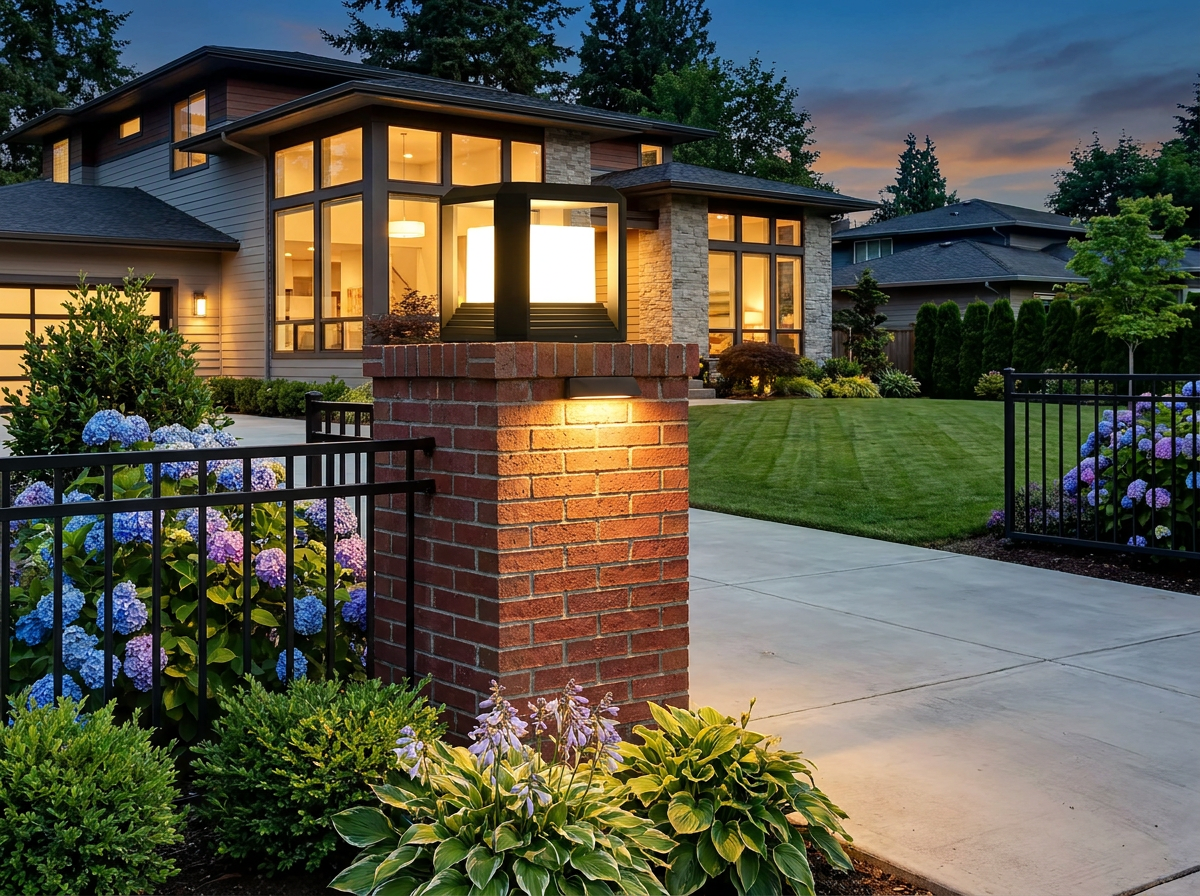
The 9.88″ PLUSLED modern black pillar lamp reads as architecture. The matte black finish, lantern silhouette, and proportions match the modern farmhouse, transitional, and contemporary American home aesthetics that dominate 2026 design. On a 6×6 wooden fence post, deck column, or brick driveway pillar, it adds the kind of finished-property look that drives both buyer perception and Zillow click-through rates in summer 2026’s slower US housing market.
When Solar Post Lights Actually Make Sense
To be fair: solar post lights have a real use case. If you’re renting, marking a temporary garden path for a single July 4th party, lighting an outbuilding with no nearby circuit, or accenting a pathway in a sunny Arizona or Florida backyard where solar charge isn’t an issue, they’re a reasonable pick. Just don’t expect them to anchor your driveway entrance or your main deck for the next five summers.
When the Hardwired PLUSLED Pillar Light Wins
For anything you actually care about — driveway gate columns, primary fence posts at the entry to the backyard, deck railing corner posts where guests gather, the brick column at the end of the walkway — the 9.88″ hardwired modern black PLUSLED pillar lamp is the obvious 2026 American choice. ETL certification, IP-rated weatherproofing, 20W of consistent 3000K warm light, and a design that holds up visually long after the July 4th 2026 cookout becomes a memory.
The Bottom Line for July 4th 2026
If your American backyard is going to be the gathering spot this Independence Day weekend — kids running around, sparklers at dusk, neighbors stopping by until late — your post lights need to work all night, every night, summer after summer. A hardwired LED pillar post light wins the comparison on every round except 10-minute installation. And the install is a one-Saturday investment that pays back in five summers of effortless, photo-ready light.
Skip the solar shortcut. Shop the 9.88″ PLUSLED 20W 3000K hardwired modern black LED pillar post light today — and have it mounted on your fence column, deck post, or driveway pillar before the first guest pulls up for July 4th 2026.
Shop This Product

Order the PLUSLED 9.88″ hardwired LED pillar post light now, plan a 45-minute install for the Saturday before July 4th 2026, and let your driveway, fence, or deck do the welcoming work all summer long.