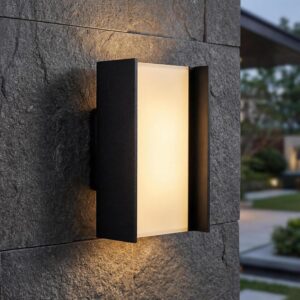
Every summer, one design detail keeps showing up on the most-shared American front doors on Instagram and Pinterest: a slim, matte-black rectangular wall sconce that throws warm light straight up the wall and straight down the siding. That silhouette isn’t an accident — it’s the fastest-growing category in outdoor wall lighting for 2026, and the PLUSLED 20W Modern LED Outdoor Wall Sconce is one of the most talked-about examples of it heading into the back half of summer.
This product spotlight goes deep on the fixture itself: the build, the light output, why the up-down design works so well on modern American homes, and how homeowners are using it to refresh their exteriors between Independence Day and Labor Day 2026. If you’ve been eyeing that clean, architectural porch look but weren’t sure which fixture actually delivers it, this is your inside look.
Why the 20W Up-Down Wall Sconce Is Having a Moment in Summer 2026
Walk through any newly built suburb in Texas, Arizona, the Carolinas, or the Pacific Northwest this July and you’ll notice something: builders and remodelers are quietly ditching the old brass lantern for narrow, matte-black rectangular sconces. Design blogs and 2026 outdoor lighting trend reports all point to the same shift — minimalist silhouettes, warm 3000K color temperature, and dual up-down beams that hug the wall instead of casting a boring flat pool of light.
The PLUSLED 20W Modern LED Outdoor Wall Sconce fits that trend so precisely it almost feels engineered around it. The fixture is a slim aluminum rectangle in matte black, 20W total output, integrated LED, IP-rated waterproof housing, and — the star of the show — an up-down beam pattern that turns a plain siding, brick, or stucco wall into an architectural feature after sunset.
The Build: What Actually Comes in the Box
Let’s talk hardware first, because that’s where a lot of budget outdoor sconces quietly fall apart after one Gulf Coast summer or one Midwest winter. The PLUSLED 20W Modern LED Outdoor Wall Sconce is built around a die-cast aluminum housing coated with a matte black powder finish. That combination matters for a very specific reason: aluminum resists corrosion better than steel around coastal air and pool chemicals, and the powder-coat matte finish doesn’t turn glossy or chalky after 200+ hours of direct sun the way cheap spray finishes do.
The fixture is hardwired (no batteries, no solar panels), IP65-class waterproof, and rated for wet locations — which in plain English means you can mount it on an uncovered wall and stop worrying about rain, sprinkler spray, or humid Southeast summers. The LEDs are integrated, meaning there is no bulb to swap. Total draw is 20W for the pair of up-down beams, replacing what used to be a 100W-plus incandescent lantern.
Quick Specs at a Glance
- Wattage: 20W total (integrated LED, no bulb to replace)
- Color temperature: 3000K warm white — matches the tone most American homeowners want on a porch
- Housing: Die-cast aluminum with matte black powder coat
- Waterproof rating: IP65, rated for wet locations
- Beam pattern: Up and down, wall-washing effect
- Installation: Hardwired, standard US junction box compatible
- Price: $59.99 — significantly under the $120–$200 designer-brand equivalents
Why the Up-Down Beam Design Beats a Traditional Lantern
Traditional porch lanterns cast light in a 360-degree pool. That worked fine when a porch light’s only job was “so we don’t trip on the doormat.” In 2026, homeowners are treating their front door as the single most photographed part of the house — the Zillow cover shot, the Instagram flat-lay, the reel shared before the summer BBQ. That means light has to do two things at once: illuminate for safety and flatter the architecture.
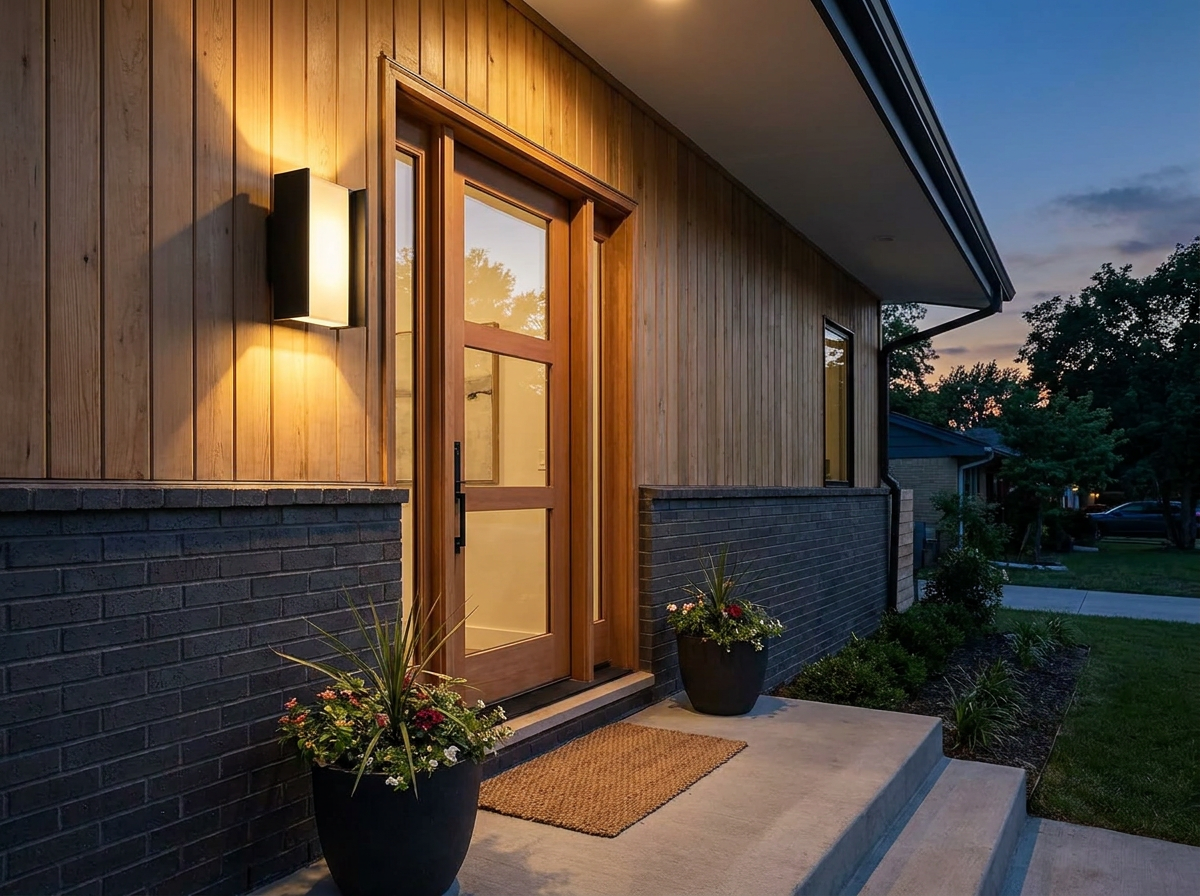
The up-down design does exactly that. The upper beam grazes the siding and highlights the texture — vertical board-and-batten, cedar planks, painted brick, or fiber cement — creating a soft vertical column of warm light. The lower beam pools right onto the walkway or the door threshold, marking the entrance without blinding guests. It’s the same lighting principle high-end restaurants and boutique hotels use on their entryways, packaged in a $59.99 fixture.
Where the PLUSLED 20W Sconce Actually Shines (Literally)
Not every fixture works everywhere. Here are the placements where this specific sconce is delivering the best results for homeowners this summer:
1. Flanking the Front Door
The classic setup: one sconce on each side of the front door, mounted at eye level (roughly 66–70 inches from the porch floor to the center of the fixture). The dual up-down beams create a symmetrical light frame around the entrance. This is the setup you’ll see in almost every modern farmhouse and transitional-style home built between 2020 and 2026.
2. Beside the Garage Door
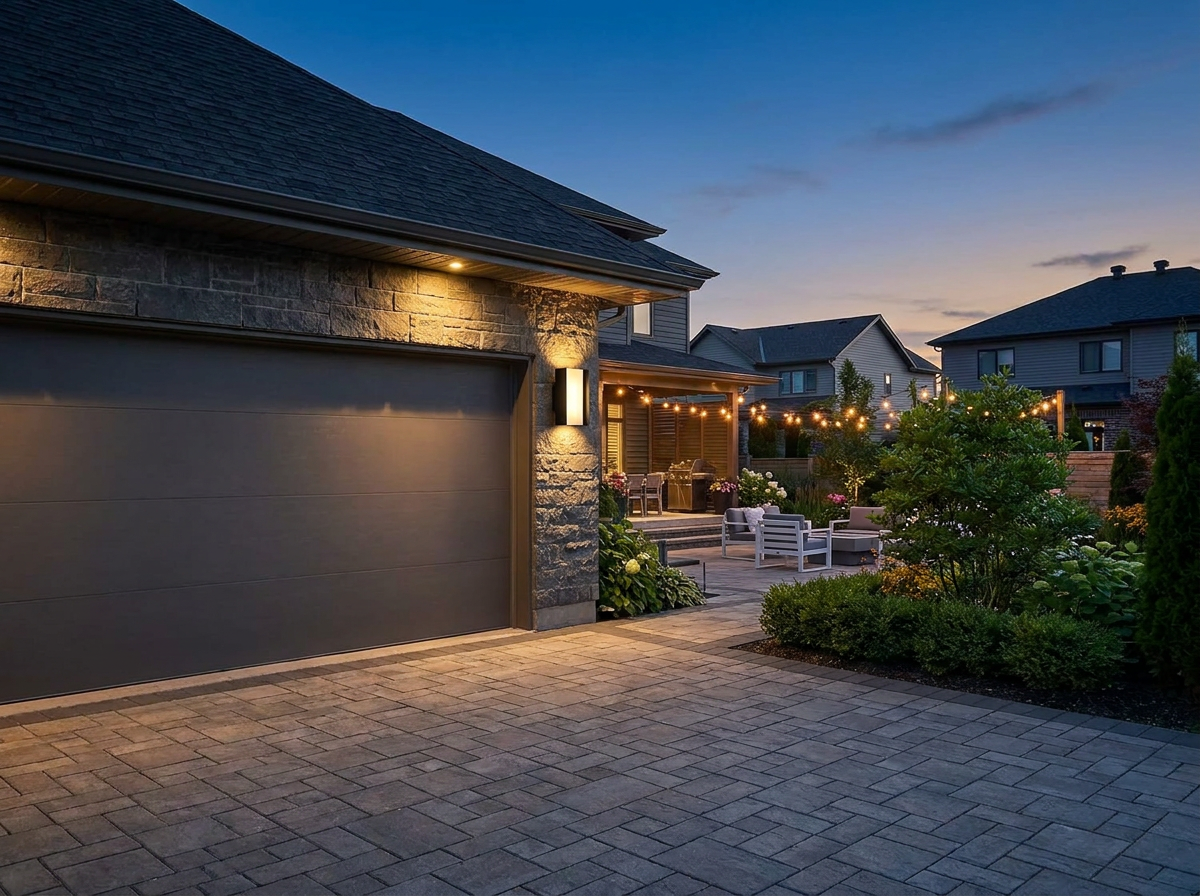
Garages are the largest single wall on most American homes, and they’re usually the darkest. A pair of these sconces mounted 12–16 inches out from each side of the garage door instantly turns a blank facade into an architectural focal point — and adds real security value at the same time.
3. Backyard Patio and BBQ Wall
This is where the fixture earns its keep in summer 2026. Mount two or three along the wall next to your patio dining table or grill station, and the warm 3000K light turns a hard exterior wall into a soft-lit outdoor room. It’s the finishing touch a lot of summer patio makeovers are missing — the string lights get all the credit, but wall sconces are what make the space feel architectural instead of temporary.
4. Between Garage Bays
On homes with three-bay garages, dropping a single sconce between each garage door creates a rhythm — light, door, light, door, light — that reads as expensive and intentional. This is one of the highest-impact, lowest-cost curb appeal upgrades a homeowner can make before listing a house.
The 3000K Question: Why Warm White Wins Outside
One thing that separates this fixture from cheaper knockoffs on Amazon is the color temperature: locked at 3000K warm white. Some competing sconces ship at 5000K or 6000K “daylight” — which reads as harsh, blue-tinted, and vaguely institutional after dark. 3000K is the sweet spot that matches interior warm-white bulbs, so when your guests look at the front of your house they see one cohesive glow, not a jarring mismatch between the porch and the windows.
It also matters for photography. If you’ve ever tried to photograph your home at dusk for a listing or a social post, you know that mismatched color temperatures ruin the shot. 3000K on the exterior lines up perfectly with what most cameras and phones auto-white-balance to — which is why the homes that photograph best are almost always lit at warm color temperatures.
Installation: A Real Weekend Project, Not a Contractor Call
Because the fixture uses a standard US junction box mounting plate, most homeowners can install a pair of these on a Saturday afternoon. You’ll need a voltage tester, a Phillips screwdriver, wire nuts, and about 20–30 minutes per fixture if you’re replacing an existing sconce. The instructions are diagram-based and don’t require an electrician if you’re just swapping an existing porch light on the same circuit.
Two tips from installers who’ve done dozens of these this summer: (1) always turn off the breaker and test with a voltage tester before touching wires, and (2) use a small bead of clear silicone around the top mounting screw to shed water away from the wall penetration. Neither is required by the instructions, but both add years to the life of the install.
What Real Homeowners Are Saying After 60+ Days of Use
By mid-July 2026, the earliest units shipped this spring have been on American walls for a full three months — through spring storms, early summer heat waves, and the humid Fourth of July stretch. The consistent feedback: the finish is holding up, the light output stays even (no dim-corner LED issues), and homeowners are commenting on the up-down beam pattern being more dramatic in person than in product photos.
The single most repeated compliment? “It looks like it belongs on a $600,000 home.” That’s a big deal for a $59.99 fixture, and it’s exactly why this sconce keeps ending up on curb-appeal-boost lists ahead of Labor Day 2026.
Who This Fixture Is (and Isn’t) For
It’s for you if: your home is modern, transitional, farmhouse, contemporary, or industrial in style; you want that clean, architect-designed exterior look; you’re willing to spend one Saturday installing a pair; and you care more about the way the light shapes your wall than about a decorative fixture that shows off from the street.
It’s not for you if: your home is a strict traditional colonial, Victorian, or Cape Cod where a classic lantern is architecturally required; or if you want an omnidirectional light source that fills the entire porch with light (this is a wall-wash fixture, not a room-fill fixture).
The Bottom Line: A $59.99 Upgrade That Actually Punches Above Its Price
Outdoor lighting is one of the highest ROI exterior upgrades an American homeowner can make in 2026. Real-estate photographers, staging pros, and remodel-and-flip investors all rank it above landscaping and just below fresh paint for its impact on perceived home value. The PLUSLED 20W Modern LED Outdoor Wall Sconce hits all three of the boxes that matter: it looks expensive, it survives American weather, and it costs less than dinner for four.
Between now and Labor Day 2026, if you’re planning any exterior refresh — a repaint, new front door, new house numbers, or a full curb-appeal push — swapping your porch lights for a pair of these is the single change guests, guests, neighbors, and future buyers will notice first. Shop the PLUSLED 20W Modern LED Outdoor Wall Sconce today and see how it transforms your entryway this summer.