
Spring is the season when American homeowners finally tackle the outdoor upgrades they’ve been planning all winter — and for millions, the first stop is the front porch. Whether you’re listing your home for sale, hosting spring gatherings, or simply refreshing your curb appeal, one question comes up again and again: should you buy a die-cast aluminum outdoor wall sconce, or is a plastic fixture good enough? In 2026, this material comparison is more relevant than ever, and the answer could mean the difference between a fixture that lasts a decade and one that fades, cracks, or fails within a couple of seasons.
Why Material Matters More Than Most Buyers Realize
Most shoppers focus on style, wattage, and price when buying outdoor wall sconces — and all of those matter. But the material of your fixture’s housing is arguably the single biggest factor determining long-term performance. Outdoor wall lights face a brutal combination of UV radiation, rain, humidity, temperature swings, and for coastal homeowners, salt air. The material has to hold up to all of it, year after year.
In the US market, you’ll broadly find two categories: fixtures made from die-cast aluminum and fixtures made from plastic or polycarbonate resin housings. Let’s compare them head to head across the dimensions that matter most this spring.
Round 1: Durability and Weatherproofing
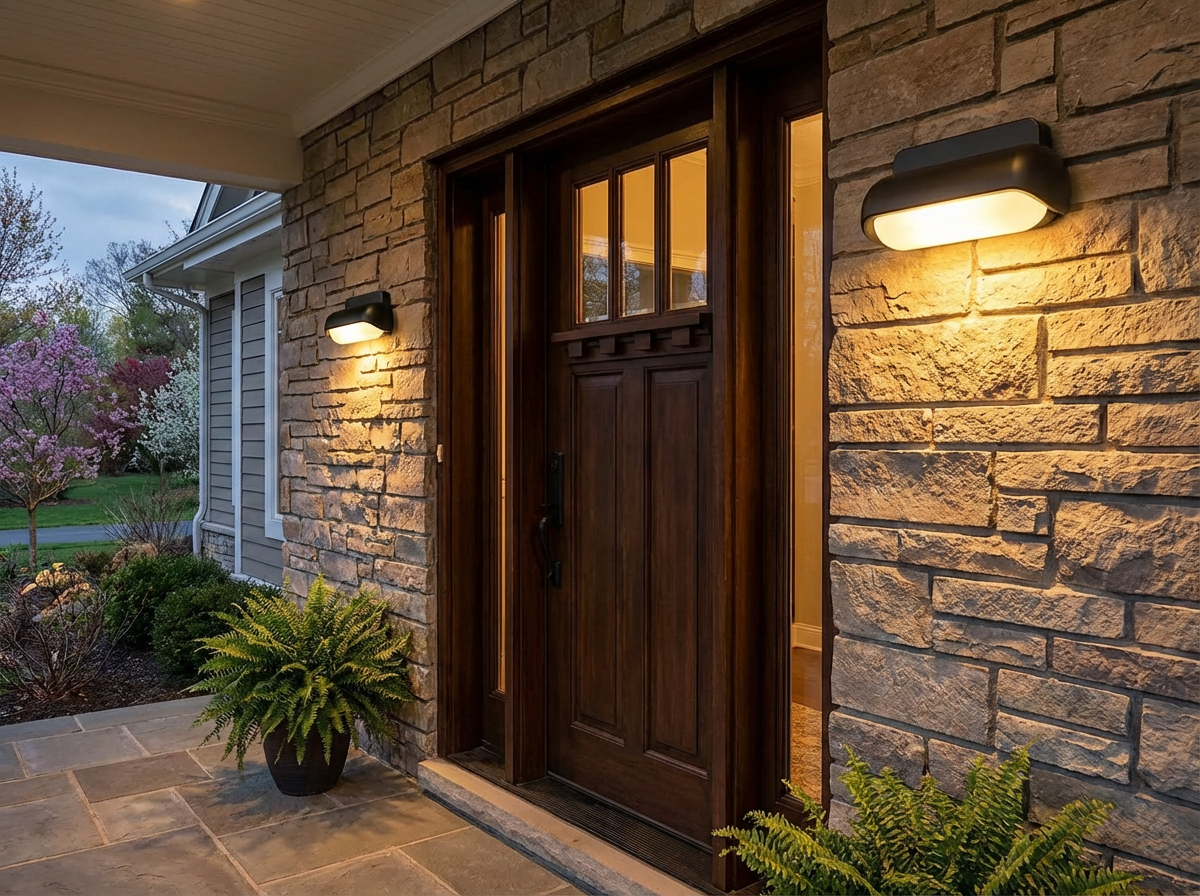
Aluminum: Die-cast aluminum is the material of choice in quality outdoor fixtures for good reason. It’s inherently corrosion-resistant, won’t warp or become brittle with age, and handles temperature extremes without degrading. A well-made aluminum sconce won’t crack in a Michigan winter or soften in a Texas summer. The metal’s density also provides structural rigidity — mounting holes stay true, and the housing doesn’t flex under wind load.
Plastic/Resin: Lower-cost fixtures use ABS plastic or polycarbonate resin for the housing. While modern resins are better than they used to be, they remain susceptible to UV-induced brittleness over time. In sun-heavy states like Arizona, Florida, or California, a plastic housing can start showing surface crazing or discoloration within two to three years. Extreme cold can make them brittle, increasing the risk of cracking around mounting points.
Winner: Die-cast aluminum — by a wide margin. This is why the PLUSLED Modern Wall Sconce Outdoor Porch Light uses a high-quality die-cast aluminum alloy housing paired with an IP65-rated waterproof seal. It’s designed to survive the full range of American climates without compromise.
Round 2: Aesthetic Longevity and Finish Quality
Aluminum: The powder-coat finishes applied to aluminum fixtures are baked on at high temperatures, creating a surface that resists chipping, peeling, and fading far better than paint on plastic. A matte black or brushed nickel finish on a quality aluminum sconce will still look sharp five years from now. The clean lines and weight of aluminum also give the fixture a premium look that reads as intentional and high-end from the street.
Plastic/Resin: Plastic housings can be molded into almost any shape, which is why they’re popular for ornate or decorative styles. But the trade-off is finish durability. UV exposure causes plastic finishes to chalk or yellow over time, and the color saturation fades noticeably compared to aluminum. A fixture that looked great in a product photo can look weathered within a few years.
Winner: Die-cast aluminum — for homeowners who want their fixture to still look great in the photos when they sell the house years from now, aluminum’s finish durability is unmatched.
Round 3: Heat Dissipation and LED Performance
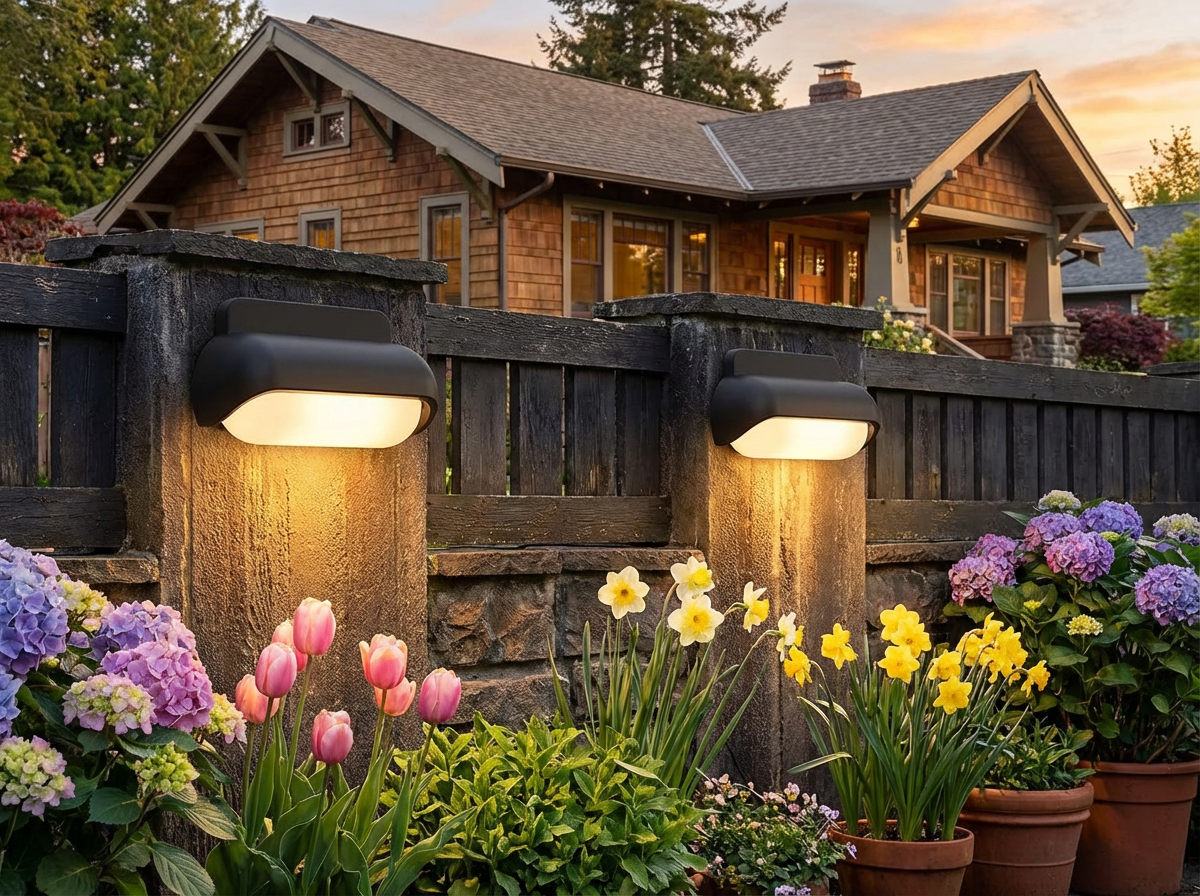
This is a category most buyers never think about — but it’s critically important for LED lifespan. LEDs are sensitive to heat. The cooler you can keep the driver and LED chip, the longer the light source will last. Die-cast aluminum is an excellent thermal conductor; it actively wicks heat away from the LED components, keeping operating temperatures down. Plastic, by contrast, is an insulator — it traps heat around the electronics, which accelerates LED degradation and shortens the fixture’s rated lifespan.
That’s why a quality aluminum sconce rated at 50,000 hours of LED life can actually hit close to that number in real-world use, while a plastic-housed fixture may underperform its rated lifespan significantly. For outdoor lights that run 8–10 hours per night, this difference in heat management translates directly to years of additional service life.
Round 4: Value Per Dollar — Does Aluminum Cost More?
Aluminum fixtures typically carry a modest price premium over plastic equivalents. But when you factor in replacement costs, that math flips quickly. A $25 plastic sconce that fails or looks degraded in three years costs you twice as much over six years as a $50 aluminum fixture that’s still performing perfectly. Add in the time cost of shopping, installation, and the environmental cost of disposal, and aluminum delivers better total value.
The PLUSLED Modern Wall Sconce Outdoor Porch Light Waterproof Patio Lamp is priced at $76.99 for a 2-pack — meaning you’re getting two IP65-rated, 13W, 3000K warm white aluminum sconces for less than $40 each. That’s a price point that makes the superior material choice accessible without sacrificing your budget for other spring projects.
Round 5: Installation, Mounting, and Long-Term Stability
One practical advantage of die-cast aluminum that rarely gets discussed: the mounting plate and hardware hold up better over time. Plastic mounting plates can warp or crack under the sun’s heat, causing the fixture to shift slightly on the wall — a subtle but visible problem from the street. Aluminum maintains its dimensional stability regardless of temperature. Mounting screws stay torqued, and the fixture stays flush and square against your siding or stucco for years.
For the PLUSLED wall sconce, the PC (polycarbonate) diffuser is used specifically for the light-transmitting lens — where it excels at distributing warm 3000K illumination evenly — while the structural housing remains all-aluminum. This is smart materials engineering: each material is used where it performs best.
The Bottom Line for Spring 2026
If you’re shopping for outdoor wall sconces this spring, material isn’t a minor detail — it’s the foundation of your fixture’s long-term performance. Aluminum wins on durability, finish longevity, heat dissipation, and mounting stability. Plastic wins only on initial price for entry-level product, and even that advantage disappears when you account for total cost of ownership.
For American homeowners who want a modern, waterproof, energy-efficient porch sconce that will still look great and perform reliably three, five, and ten springs from now, the PLUSLED Modern Wall Sconce Outdoor Porch Light is purpose-built for exactly that. With a 13W LED engine, 3000K warm white output, IP65 waterproofing, and a die-cast aluminum housing, it checks every box — and at $76.99 for a 2-pack, it does it at a price that makes sense for any home improvement budget.
This spring, don’t let your porch lighting be the weak link in your home’s exterior. Upgrade to aluminum, invest in quality once, and enjoy the result for years to come.
Shop the PLUSLED Modern Wall Sconce today at plusledlighting.com and give your front porch the durable, stylish upgrade it deserves this season.
Shop This Product
Like what you see? Click below to view full product details and order from our store.
View Product Details →